

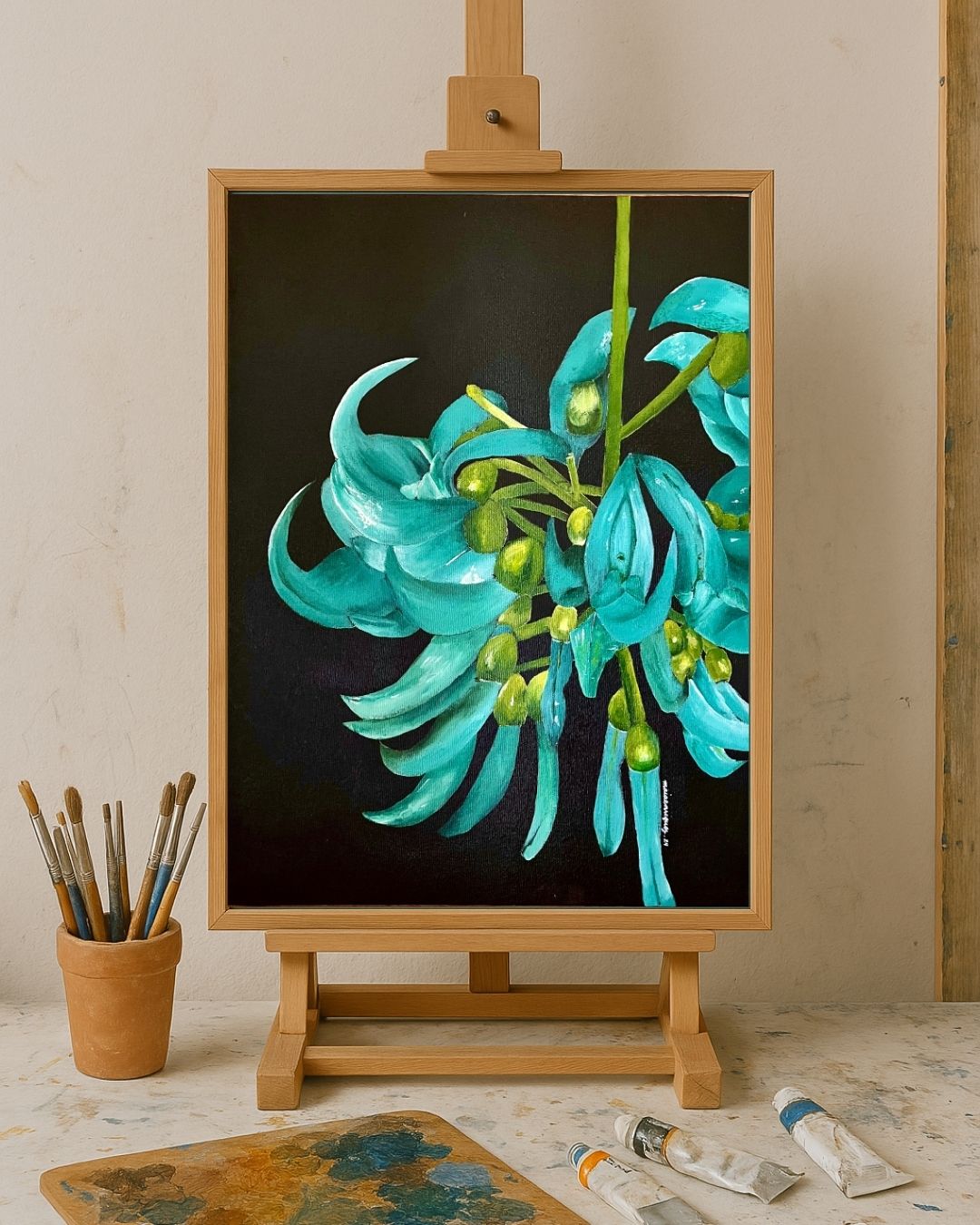
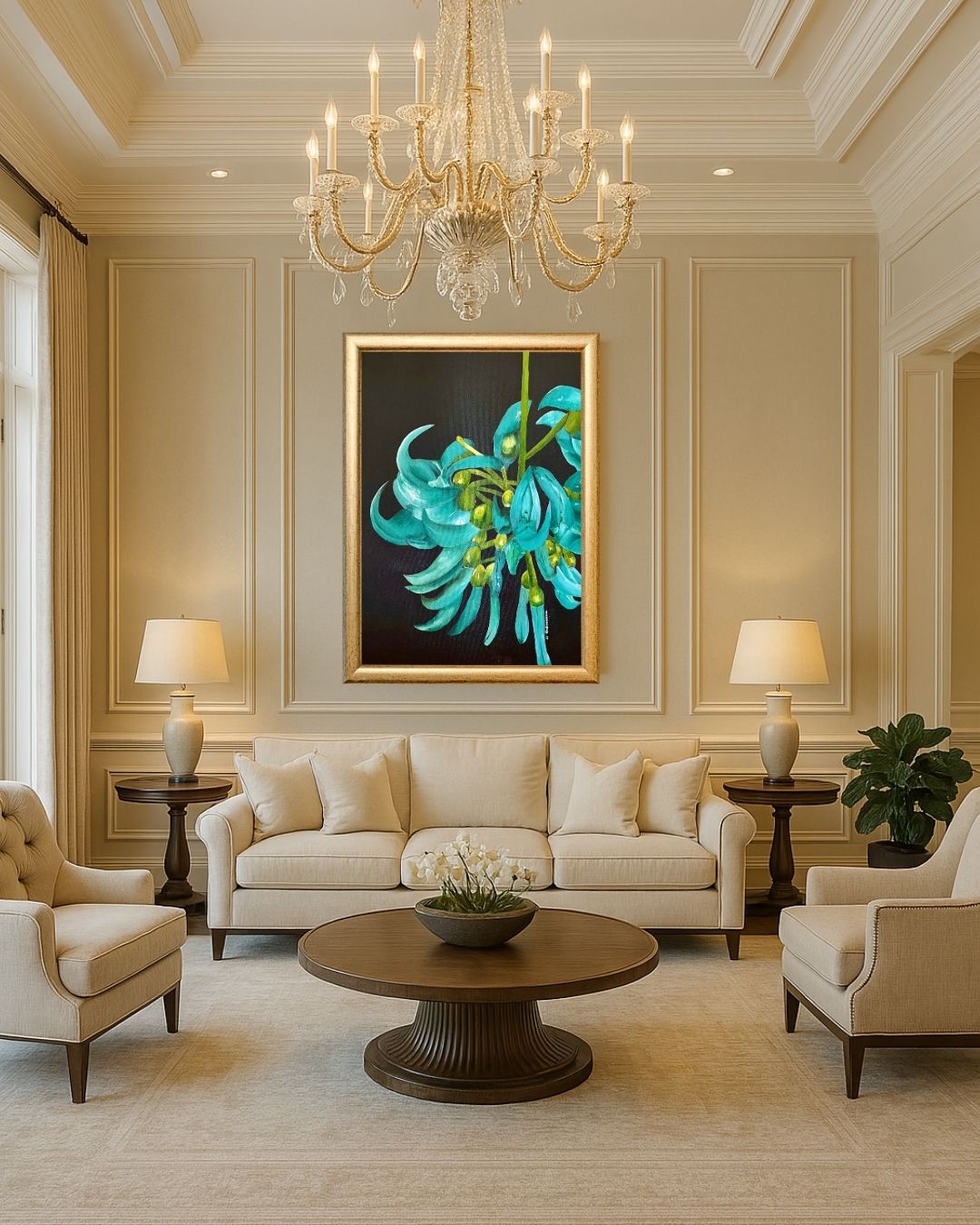
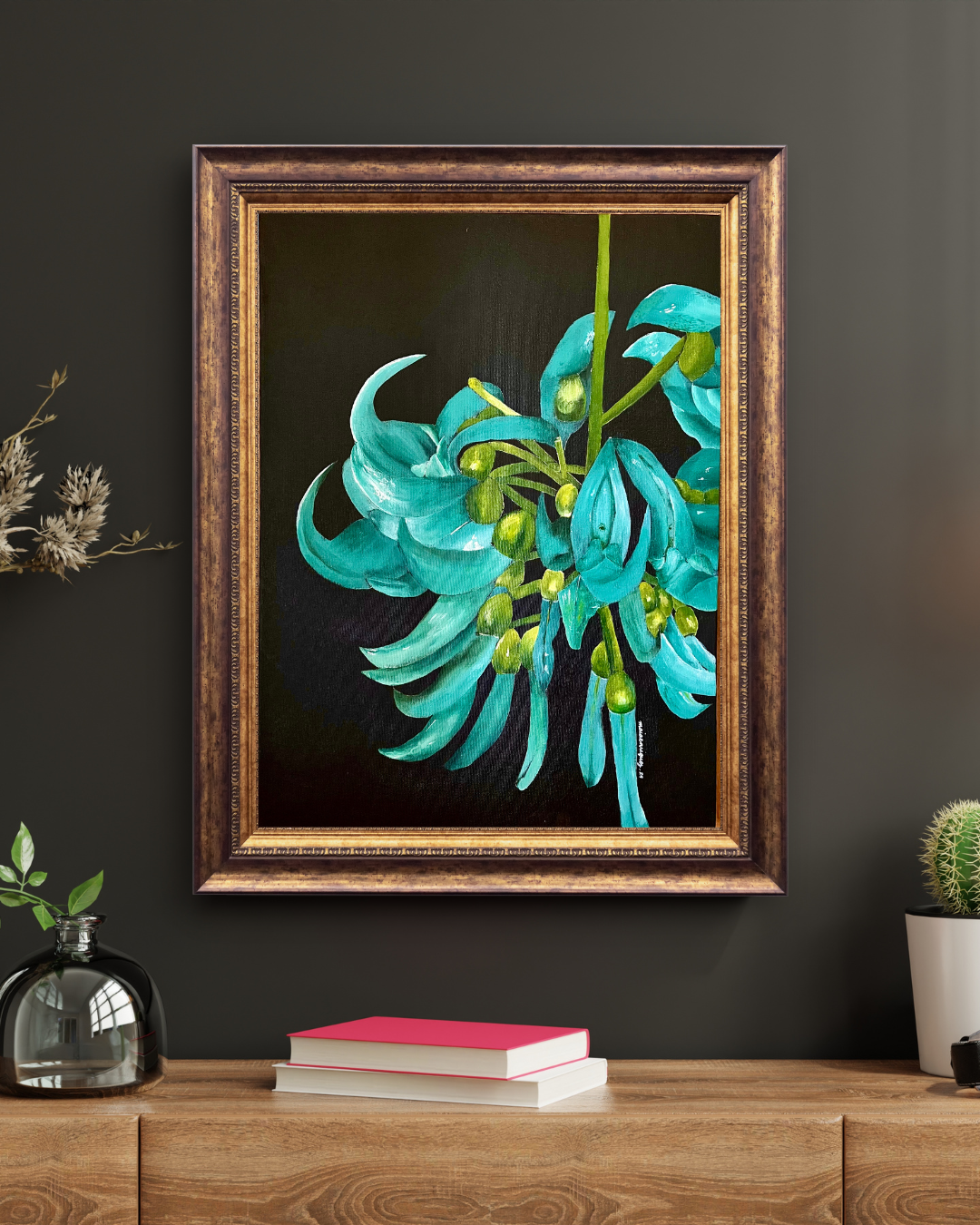
Painting by Sihay | Acrylic on canvas | 2024
Nestled deep in the verdant canopy of Philippine forests grows a vine both dazzling and elusive—Strongylodon elmerii, a species of flowering legume found only in the Philippines. With its turquoise blossoms curling like delicate claws, S. elmerii is a rarer cousin of the more familiar jade vine (Strongylodon macrobotrys). Unlike its more photographed relative, elmerii reveals its beauty in hushed tones—a luminous blue-green that glows like moonlight filtering through leaves.
As an artist and science communicator, I was drawn to this plant not only for its striking aesthetics but also for the deeper story it carries.
A Hidden Jewel of Philippine Forests
S. elmerii belongs to the Fabaceae, or pea family—a group of plants deeply intertwined with forest health. Members of this family are known for nitrogen fixation, an ecological service that enriches soils and sustains the complex web of tropical biodiversity. But what truly captivated me was its pollination strategy: it depends on bats.
This intimate relationship with nocturnal pollinators underscores how interconnected ecosystems are. The survival of one depends on the other—vine and bat, flower and wing, night and bloom.
The Vine Called Mauini
In some parts of the Philippines, the vine is remembered by another name: Mauini. This name lives on in local place names—testaments to the community memory rooted in landscapes. To paint Mauini is to honor a cultural and ecological lineage, one that binds language, biodiversity, and belonging.
For me, art is more than aesthetic—it’s a method of witnessing, of translating natural history into forms that stir the heart as much as the intellect. This painting, like many of mine, is an offering: part study, part reverence.
Painting as Reclamation
Each brushstroke is a quiet act of conservation, a way to make visible the lives of native species that too often fade from public awareness. I paint to draw attention to these “intelligent, quiet lives”—the ones that persist at the forest’s edge and in the margins of our memory.
By naming and depicting them, we make space for them in our collective consciousness. We begin to see not just a beautiful flower, but a living archive—of biology, place, and identity.
 Sihay
Sihay 
Leave a comment