

Painting the Wild Elegance of a Philippine Native
By Sihay | Watercolor on paper, 2024
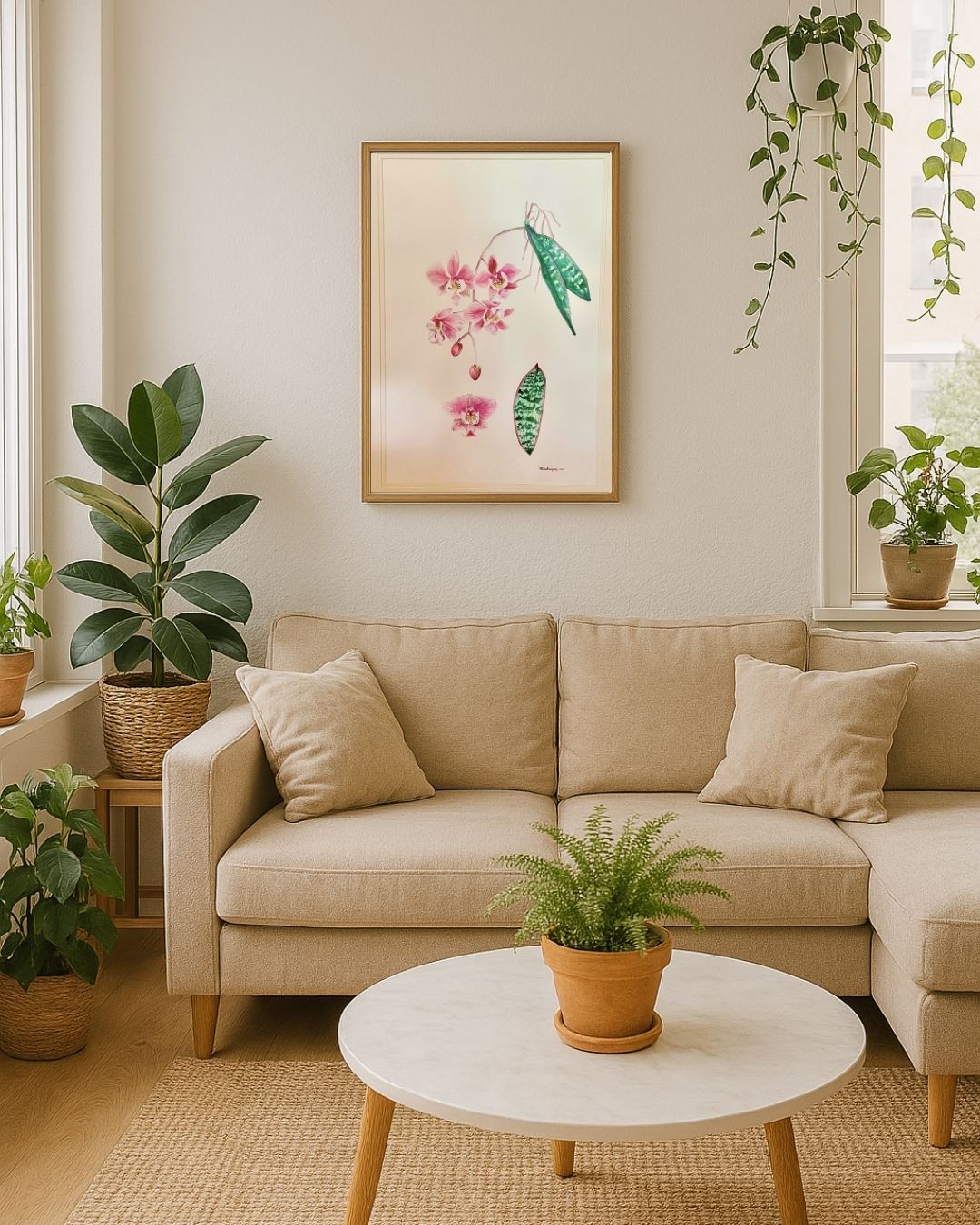
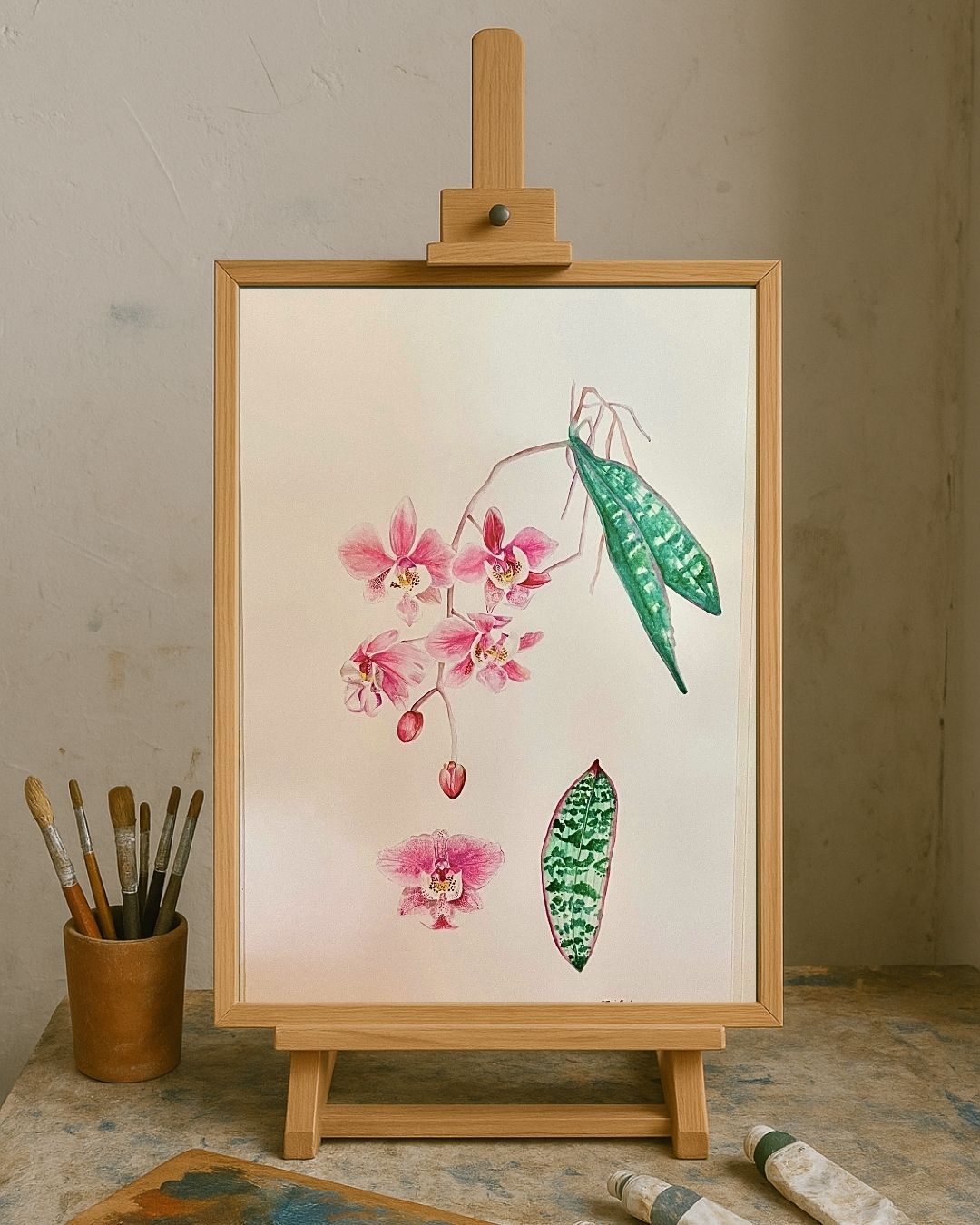
Beneath the forest canopy of the Philippines blooms a delicate, quietly magnificent orchid—Phalaenopsis schilleriana. Endemic to the archipelago, this species has long held a revered place in both botanical circles and the hearts of plant lovers. Its pale pink to lavender blossoms cascade in graceful arcs, while its silvery-green, marbled leaves glint like sunlit water. This is not just a flower—it is a living manuscript of ecological storylines and evolutionary artistry.
A Portrait Rooted in Place
In my latest watercolor study, I set out to capture not only the ornamental appeal of P. schilleriana, but its biological identity. Every brushstroke was an invitation to observe: the arch of its inflorescence, the texture of its roots, the glimmer of mottled foliage—each a quiet testimony to the plant’s natural habitat and resilience. Painting it felt less like illustration and more like fieldwork with a brush.
I often describe my botanical work as “visual field notes.” These paintings are both scientific and intimate—acts of witnessing that attempt to honor not just the form of a species, but its ecological narrative. For me, art is a way of slowing down the gaze, of holding attention long enough for insight—and care—to take root.
From the Wild to the World
Phalaenopsis schilleriana was first described in the 19th century and has since become a foundational parent in the hybridization of modern Phalaenopsis orchids. Its fragrance and striking leaf patterning continue to inspire cultivars around the world. Yet in celebrating its horticultural contributions, we must also acknowledge its origins—and fragility.
This species, like many Philippine endemics, faces increasing threats from habitat loss and overcollection. Through this painting, I hope to remind viewers that beauty is often born from—and bound to—specific places. Conservation begins with recognition.
Science, Art, and Advocacy
Botanical illustration has always bridged disciplines, requiring both precise observation and artistic sensitivity. In this work, I hope to reflect that union: a painting that is part specimen record, part love letter to native flora.
In making P. schilleriana visible, I want to make its story matter—to encourage an ethics of attention where biodiversity isn’t abstract, but personal.
 Sihay
Sihay 
Leave a comment