
Every villain’s redemption arc begins with their origin story.
There was a time when I truly believed I was a bad person. It’s what I’ve been hearing whenever I mess up, whenever bad things happen to me. It was never a matter of dumb luck, or that bad things just happen every day to everyone. No. Growing up, I believed that if something horrible happened to me, it was a punishment of some sort. I heard it in another person’s voice at first, and then in my own soft, gentle voice. Remembering that breaks my heart — to think that I internalized these voices as my own.
I’ve made a significant stride in my internal dialogue, the way I view the things that happen around me, and most importantly, how I react to them, but there are still parts of my history that I can’t quite grasp — how deep the trauma runs in the family, or why people didn’t do anything as it was happening, why people seemed to turn a blind eye.
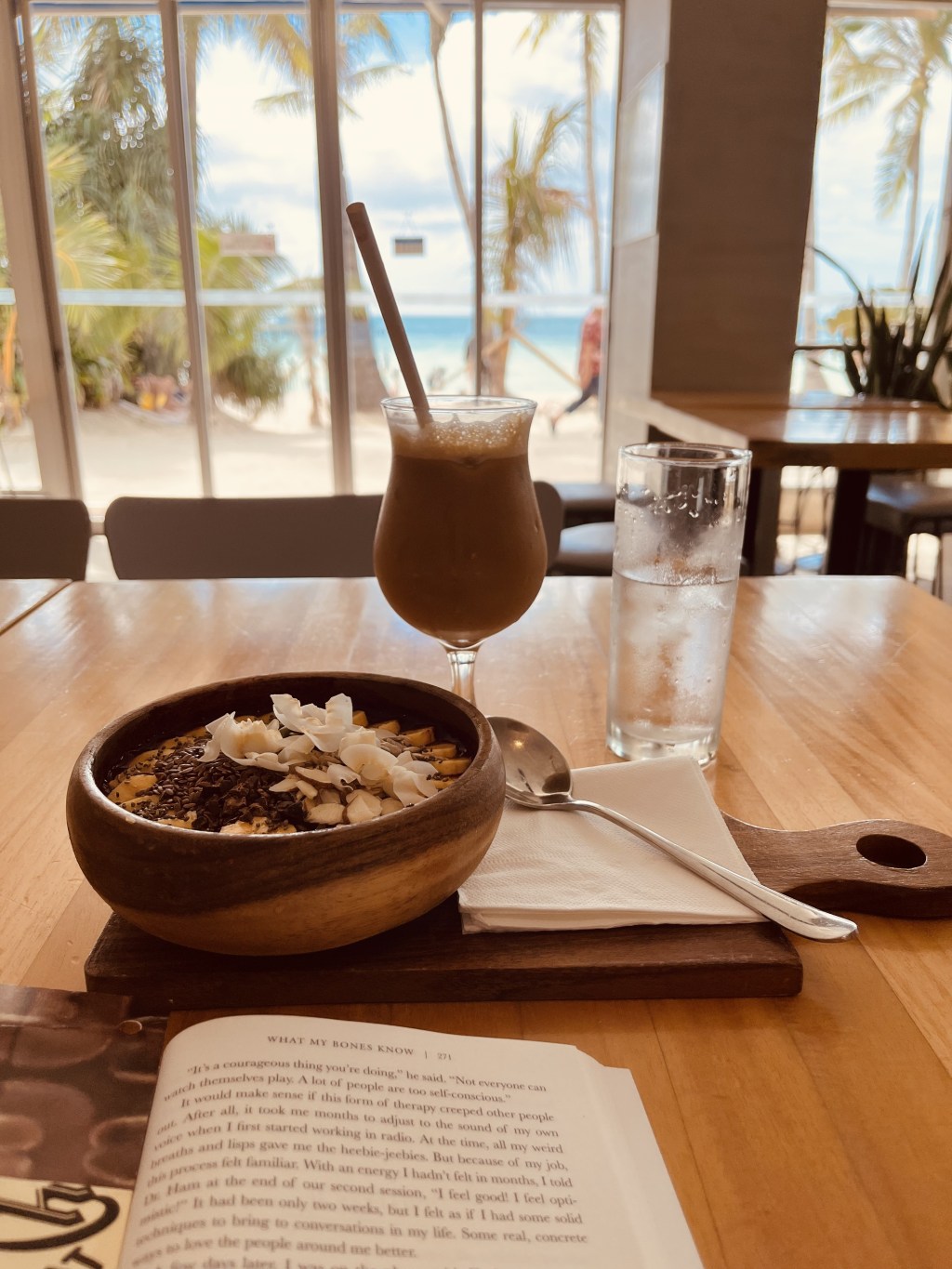
What My Bones Know is Stephanie Foo’s memoir of healing from her complex trauma (C-PTSD). It was a non-fiction, possibly a self-help book, but it read like a novel to me. I was supposed to read this book weeks ago, but the first few chapters hit close to home and triggered my past trauma that I had to put it down for a while. Yes, what I endured didn’t compare to that of the author, but it was close. It was like watching a movie version of my childhood with distorted lenses. I read parts of it in coffee shops, in the middle of a beautiful beach, surrounded by sunlight and salty breeze, and I couldn’t help but run to the bathroom and cry there, grieving for the childhood I could have had. For a day or two, I remembered my past ruminations: “If this is where life led me with the kind of past I have, what could my life be like if I had it easy, if I had a perfect support circle?”
It was helpful that Foo started the book by saying that it had a happy ending. I’d say that she and I have the same approach when dealing with difficult things — rationalization. It’s much easier to understand my confusing circumstances and let go of the emotions that can eat me up inside if I can read about it, if I can somehow find explanations, answers to my questions. When she got her diagnosis, she spent a minute feeling bad about it, then proceeded to find closure for herself by looking into her family history, different psychiatric methods, and wellness practices. That sounds like something I would do, something I already did.
It shouldn’t have been, but the fact that trauma is inherited was a revelation for me. I learned this in my epigenetics classes in college and grad school. I knew that gene expression is affected by environmental factors. I must have known this already, but it never occurred to me that it didn’t stop a generation back. For this kind of trauma to pester in me in the past, this must have been in my family for generations. I remember the conversations I had with my grandparents — the wars, poverty, sexism, arranged marriages — I should have known this long ago. But I guess it’s easier to understand your story when it’s told by someone else. For us to absorb any kind of truth, we need a level of detachment from it.
This book made me feel seen more than any person in my life did. It provided an explanation of why people seemed silent about my suffering before — because bringing it up might exacerbate things, making it harder for me. This realization made me see my childhood in a new light, why I always felt I was the favorite. It wasn’t because I was special; it was my extended family’s way of letting me know that I was (am) worthy. They were hoping that their collective kindness was enough to get me through it all.
This book gave me the permission to accept that I won’t handle my past trauma the way other people do, and that’s okay. That I don’t need to demand apologies or shout the injustices on the rooftops. I was never one to confront someone if I knew it wouldn’t result in anything helpful. I guess I inherited my grandmother’s quiet dignity in times of adversity. Not to discount my suffering, but she had literally survived wars, and her silent strength got her through to the other side. I’ve stopped expecting apologies and justice.
Getting through every trauma with my identity and view of the world intact is justice enough for me.
It was incredibly empowering and enlightening to see my trauma, both past and present, as a superpower. My reactions — the way my brain becomes remarkably still and calculating, my hands reach for a weapon, my legs tense, always ready to run — are all survival skills I’ve learned through the years. I’m not a victim of crisis; I was trained for it. My neuroticism might not make sense on a day-to-day basis, but it comes in handy with every catastrophe.
And yes, I learned from my past trauma, but this is also my family’s legacy. I primp myself, take care of my home, go to work and do great things, come home and create art come hell or high water, even in the middle of a pandemic. I learned it from my grandmother who had to grab a sibling and hide in caves from Japanese soldiers. I learned it from my grandfather, who was taught in his teens how to fire a gun and hold a balisong (butterfly knife) as if it were a part of his arm. He gave me that knife when I was in college as one of the students in the university was raped and brutally killed. He said I will need it to protect myself. It was the one and only physical gift he gave me.
This book reminded me to always put in as much goodness and love as I can in every situation I find myself in. I could have had an easy life if I wanted to, but I thought that wouldn’t fulfill me. I made a conscious choice to live the life I wanted, despite the challenges. I know I can figure it out. Little did I know that my family, for generations, had also been training me for it, albeit subconsciously. I’m not free from trauma, not entirely, and I continue to heal, perhaps for the rest of my life. I owe it to the future generation. I will, in every way I can, lay down the groundwork for those yet to come. Who knows what kind of stress-related gene might be methylated in my future progenies? If I can’t break the curse, I can at least prepare them better for the difficult life ahead. This doesn’t bother me anymore. Foo reminds us to be grateful for when our trauma helps us, and forgiving when it doesn’t.
Though wounded, I will continue to brave through life, finding answers, doing my bit, and bringing goodness and light whenever I can. If I drown, I will at least die knowing that I was heading for shore.
 Sihay
Sihay 
Leave a comment